Transparencia de Fundació CODESPA Catalunya
Circular economy ventures: an opportunity for sustainable development.
The circular economy is a production and consumption model that seeks to minimize waste through the reuse, recovery, recycling, and transformation of existing materials and products. Unlike the traditional linear model (produce-use-dispose), this system extends the life cycle of resources and generates positive environmental, economic, and social impacts.
The social and environmental benefits of the circular economy.
The circular economy is especially relevant in rural communities experiencing poverty and vulnerable contexts because:
- It generates local employment through the utilization of waste, especially agricultural waste, and the efficient use of resources.
- It promotes self-sufficiency through increased income with value-added products and local innovation.
- It reduces dependence on external inputs such as fertilizers or energy.
- It empowers vulnerable groups and integrates them into sustainable value chains.
- It reduces the environmental impact, since discarded agricultural waste is typically burned, generating highly polluting gases, primarily methane and carbon dioxide, both considered greenhouse gases that contribute to climate change.
Circular economy initiatives to promote sustainable Development
CODESPA’s experience in countries such as Colombia, Ecuador, the Philippines, Morocco, and Peru shows that initiatives promoting circular economy ventures can offer an opportunity to improve the living conditions of people facing exclusion. They offer small farmers alternative income-generating options by transforming agricultural waste, which is normally discarded or burned, into higher-value products that allow them to access the market and obtain a better price. These initiatives benefit communities, helping to build a more just and sustainable economy.
CODESPA is carrying out various projects to promote the development of small circular economy businesses to combat poverty and foster the sustainable development of vulnerable communities. These include:
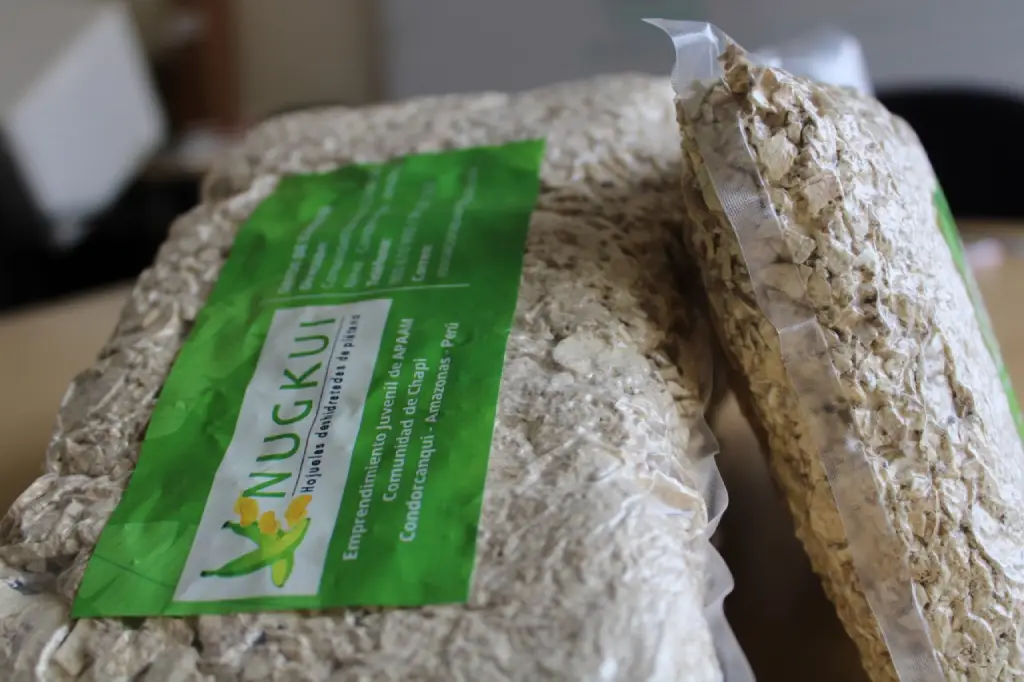
- Banana-derived products in the Peruvian Amazon. In the Amazonas and Cajamarca regions of Peru, the majority of the indigenous population lives in poverty. Furthermore, approximately 70% of banana production, the main marketable product in these regions, does not meet the optimal quality criteria set by local buyers. As a result, part of this surplus is wasted or sold at very low prices. CODESPA supports vulnerable rural families living in poverty by promoting entrepreneurial development in collaboration with Peruvian companies. Surplus bananas, discarded because they do not meet quality standards, are used to produce high-value-added food products, such as dehydrated flakes and flours, which are in high demand in the market for their high nutritional value. Textile biofibers derived from banana stems are also obtained, which are used to produce handicrafts and as a highly sought-after raw material in the fashion industry.
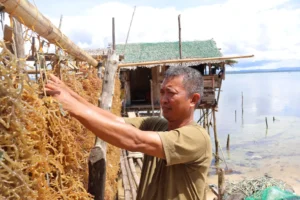
- Biofertilizers derived from seaweed, in the Philippines. In the Caraga region of Mindanao, 80% of the population lives in rural areas, and many families make a living from artisanal seaweed production. Furthermore, Mindanao’s coastal area suffers from frequent flooding and typhoons, further increasing the vulnerability of its inhabitants. After a prior process of organization and technical training for small-scale seaweed farmers, resulting in improved production and quality of seaweed, a second phase is promoting the production of higher-value seaweed-derived products. The drying process of seaweed produces a liquid, which is normally discarded, which is used to make biofertilizer. This can be sold to export companies and local farmers at a higher price than unprocessed seaweed. Furthermore, as it is a natural product and therefore less harmful than chemical fertilizers, it also helps regenerate the soil and improve the productivity of small-scale farmers’ crops.
- Biofuel derived from sugarcane, in Colombia. The project benefits people who previously stole sugarcane from sugar mills and sold it informally. Through CODESPA’s initiative, this problem has been transformed into a solution, involving these people in the collection and packaging of sugarcane leaves—the thin bark that covers the stem—for later sale to the same mills as fuel for their operations. In this way, those who previously represented a challenge for companies have now become their suppliers. In addition to generating employment and income for these communities, the use of sugarcane leaves as a natural fuel is less polluting than traditional fuels used by the sugar industry, which contributes positively to the environment.
The circular economy not only brings environmental benefits but also generates sustainable, inclusive, and resilient economic opportunities in contexts of poverty. Initiatives like those of CODESPA demonstrate that, with innovation and a community-based approach, waste can be transformed into wealth and rural communities can become leaders of change.