Transparencia de Fundació CODESPA Catalunya
Trip to southern Angola, where CODESPA promotes the development and resilience of rural communities
CODESPA has been present in Angola since 2010, where it has been carrying out economic development projects, most of them related to food security and rural market development, with communities in the south of the country, primarily in Cunene province.
Multidimensional poverty in Angola
In Angola, poverty is a widespread and complex problem, with historical roots and exacerbated by economic, social, and environmental factors. According to the UNDP and OPHI report, the Global Multidimensional Poverty Index (MPI) in Angola for 2025 indicates that approximately half of Angolans live in multidimensional poverty. This means that many people suffer deprivation in multiple aspects of their lives, such as health, education, quality of life, and employment. This rate is higher in rural areas, with rates close to 88%, compared to 30% in urban areas; and among the child population, especially those under 10 years of age.
One of the reasons for this situation is that Angola has been facing periods of severe drought and water shortages since 2012, affecting millions of people, especially in the southern provinces of Benguela, Huila, Namibe, and Cunene. The decrease in rainfall negatively impacts livestock and agriculture, the main source of income for many families, who are seeing their livelihoods deteriorate.
CODESPA's work in Cunene: local solutions to beat hunger and strengthen communities
More than 1 million people live in Cunene, a province in southern Angola. 80% of the population is rural and suffers from a semi-arid climate and recurring droughts, resulting in food insecurity and extreme poverty.
In this context, CODESPA has been working with rural Indigenous communities in Cunene since 2010 to strengthen local capacities to produce food and generate decent livelihoods in extreme conditions. The goal is to increase resilience to climate change, reduce food insecurity, and in general, improve their living conditions by increasing their income. This is achieved through:
- Training to adapt cultivation techniques to the semi-arid environment (diversification of agricultural production, selection of the highest quality seeds, what to plant, when, where, and with what rotation, etc.), as well as the provision of more resistant seeds and the creation of seed banks. All of this is implemented in Field Schools, plots where beneficiaries acquire practical and theoretical training. In these initiatives, CODESPA promotes syntropic agriculture, a regenerative agroecological model that seeks to restore degraded ecosystems. At the same time, it is complemented with nutritional training to ensure a more balanced diet for these communities. Drip irrigation systems are also implemented, when possible, for greater water efficiency. Occasionally, other initiatives are carried out, such as raising small animals (goats) and developing local food products (honey, jams). This not only provides them with food, but also goods that they can exchange in local markets for other basic necessities.
- We facilitate cooperative organization and the legalization of cultivated land, thus ensuring their right to store their own crops. By moving from individual to community-based crop management (cooperatives), small farmers pool their resources to improve their production processes, access supplies, knowledge, and credit to grow their businesses and earn a stable income.
- We promote the development of rural agricultural markets, which are essential for selling their agricultural and livestock products or exchanging them for other goods.

Stories from the Field: Visit to the Cunene Communities
CODESPA works in Cunene with communities living in isolation and far from population centers, several hours away by car. The lives of these people are extremely precarious and difficult. They lack electricity and often lack nearby access to water or basic services, such as healthcare or education.
In February of this year, CODESPA Catalunya had the opportunity to visit various communities in this province where economic development projects are being implemented. With the help of our colleagues from CODESPA Angola, we were able to speak with project beneficiaries about the initiatives being implemented and the impact they have had on their lives.
Cunene is a province of immense beauty in southern Angola. We travel during the rainy season, when the trees are in full leaf, creating a green landscape of wooded savannah and native species. However, we are told that during the dry season, this landscape changes radically, as the trees shed all their leaves to limit water consumption, leaving an arid landscape.
The people of Cunene are young, proud, hardworking, and possess enormous potential. They show great will, strength, and energy to move forward and change their precarious situation to prosper and improve their living conditions. They are a hospitable and welcoming people. Everyone we spoke to is willing to listen, learn, and even teach. They display a strong sense of community and mutual support.
Over the course of three days, we visited projects in five different communities. The dynamic was very similar in all of them. We were welcomed with songs and dances, after which we headed to a covered space to chat. This could be some wooden logs under the shade of a baobab tree or a semi-open hut made of straw and wood where we all sat. With the support of the CODESPA Angola team, who spoke in the language of each community, we spoke with the beneficiaries. After introducing ourselves, they explained how they were organized, what the CODESPA project they were implementing entailed, what they had achieved, and what they hoped to achieve. Above all, they explained how it had changed their living conditions and opened up new opportunities for their future. Afterwards, they showed us the plots of land where the agricultural projects were being carried out, where they demonstrated the work they were doing.
They told us many stories and shared their experiences.
A goat bank that multiplies opportunities
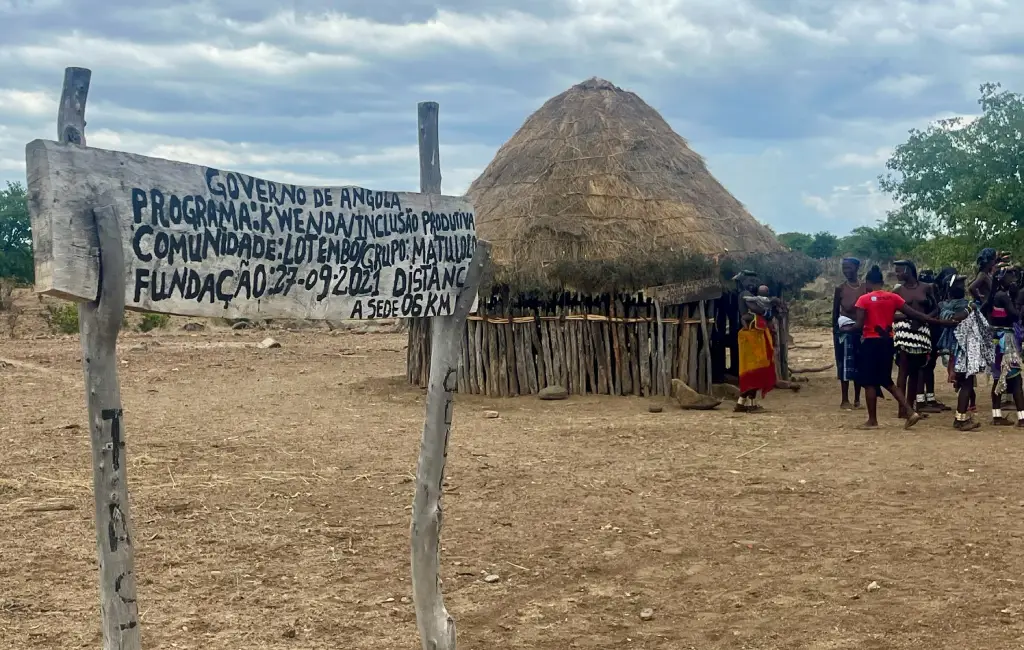
The Lotembo community, part of the Muhakaona ethnic group, is located in the municipality of Curoca and is currently implementing a CODESPA goat breeding project. The initiative involves providing pairs of goats (male and females) to the most vulnerable families. They are trained in animal care, how to multiply the goats, and how to maximize the use of goat milk and meat in their diet. Once the goats have bred, pairs of goats are given to other families to follow the same process. This creates a goat bank in the community, improving their food security and generating income through sales in local markets.



Drip irrigation, harvests for the future
The Canuno community, also in the municipality of Curoca and which includes members of the Muhakaona and Himba ethnic groups, is carrying out an agricultural and goat-raising project. They have a water tank that has allowed them to implement a drip irrigation system on their plot, where they grow fruits, vegetables, and legumes. The group includes many young women with babies in their arms. CODESPA projects help women and their families improve their nutrition, increasing agricultural productivity and enabling them to have more animals thanks to the goat-raising bank, as well as providing them with nutritional guidelines for a balanced diet.


Training that is passed down from generation to generation
In the Capanda community, a Bantu ethnic group living in the municipality of Ombadja, the project carried out by CODESPA for almost five years has now been completed. This project has included access to water from the Cunene River, along which the crop plots were established.
One of the community representatives tells us that she is very grateful for what they have achieved thanks to the various interventions. Above all, because “it has given us knowledge and training that will remain in the community forever; a legacy we can pass on to our grandchildren and great-grandchildren so they can continue to prosper and improve their living conditions.”
She also explains that, thanks to the surplus produce they have been able to sell in local markets, their income has improved over the years. This has allowed them to launch an initiative to encourage local children to attend school by providing a meal a day to those who attend. This way, they convince their parents to let them go to school instead of staying behind to help with chores around the house or in the fields. At the end of the visit, they give us some watermelons, the fruit of their labor, which they have just picked from the fields.


The Khoisan ethnic group and the challenge of survival
Our visit to the Oshimumu community in the municipality of Cuanhama had a special impact on us. The Khoisan ethnic group is original from Angola and is considered one of the oldest genetic lines in the world. They are a semi-nomadic people who move around in search of food and water, living in extremely precarious conditions. Of all the communities we have visited, this is the one that shows the highest signs of poverty and malnutrition. CODESPA is the only NGO that, so far, has reached them and provides assistance through economic development projects.
We are greeted by a small group, mostly elderly people and children. One of the members of the group explains that they are mourning because two of their sons recently died while hunting a wild boar in its den.
Thanks to the training provided by the CODESPA team, in addition to agricultural practices, they also learn how to preserve forest fruits using solar dehydrators that they are taught to build. This allows them to have food in better health conditions and preserve it for longer.
During the visit, they also teach us how to make fire manually and show us the weapons they make for hunting, such as bows and arrows.


Machinery, mills, and seeds that fuel development
The Omatunda community, also in the municipality of Cuanhama, is one of the most advanced of those we visited. Thanks to CODESPA’s interventions, they have machinery for working the fields, such as a tractor, and a community mill, powered by a gasoline generator, where they can grind corn into flour. They also have a community seed bank, which allows them to conserve and store their harvests using recycled food containers that, after cleaning and inspecting, can hold up to 236 kg of seeds. This ensures their own food supply and the possibility of earning an income. The storage space is large enough to store their own seeds and rent some containers so other communities can do the same.
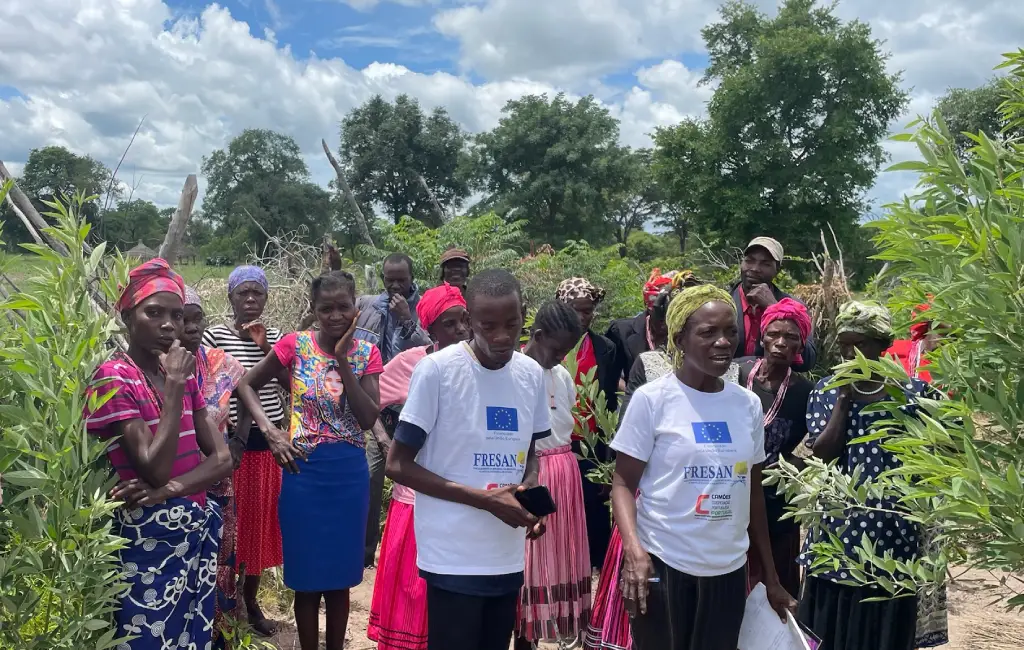


In all the communities we visited, the work is structured around cooperatives. To this end, CODESPA assists them with legal formalization and provides training and capacity building for their organization. The community itself chooses the cooperative members and the role each will play: president, vice president, secretary, treasurer, production manager, etc. They meet weekly to make relevant decisions and plan the next steps, which are formalized in minutes.
The different communities explain that they grow fruits, vegetables, and grains that they have learned about through the projects but had never tried before. And, of all the crops they show us (mango, papaya, watermelon, cassava, beans, corn, masago, sorghum, tomatoes, cactus, etc.), we are particularly struck by the moringa, a plant with a very special property: it helps purify water. To do this, they grind the seeds in a container into which the cloudy water is then poured. After letting it sit for a couple of hours, the impurities settle to the bottom, resulting in clearer, more treatable water for consumption.
A Transforming Journey
The visit to Cunene was a powerful and inspiring trip. It is very gratifying to see how, with help, we can change the future of isolated, often forgotten communities, and give them the opportunity to break out of the cycle of poverty and misery they find themselves in.
From here, I would like to express my sincere gratitude and recognition for the great work being done on the ground by the CODESPA Angola team, which is helping to change the destiny of these communities. Among them are Baptista Pedro, Fábio Fernando, Adalberto Mapanda, Hermenegildo Dimbulukeni, José Likwafeni, Zacarias Tchiliongunga, Luvuma Garcia, Fernando Manuel, Lucas Lupassa, and Emerson Augusto.