Transparencia de Fundació CODESPA Catalunya
Conserving the Amazon: New Opportunities for Waorani Women
The Waorani of Ecuador stand at a crossroads. With a population of approximately 3,000, this Indigenous community has spent centuries defending the Amazon, protecting its forests, wildlife, and ancestral knowledge from outside pressures.
However, since the arrival of missionaries and oil companies over the past 70 years, many Waorani communities have transitioned from nomadic lifestyles to permanent settlements. As a result, their traditional ways of life no longer sustain their communities.
Today, the Waorani struggle to support their families without sacrificing the culture and rainforest they have spent generations protecting.
“It is important to us that our children learn our language and that our traditions and knowledge of the forest are preserved,” explains Gladis Simbaña, an AMWAE member and representative of the Daipare community’s cosmetics bio-enterprise. “At the same time, we want them to have opportunities to study and improve their quality of life.”
While some families generate a small income by selling handicrafts, others have found employment with oil companies. Others still depend on extractive activities such as logging, agricultural expansion, hunting, and natural resource extraction.
Although many of these activities can provide immediate income, they also cause harm to the rainforest that their ancestors have spent centuries protecting.
Bioenterprises for a Sustainable Future
CODESPA wants to provide these communities, particularly Waorani women, with a sustainable alternative for generating income.
Since January 2025, with the support of The Nando and Elsa Peretti Foundation, Delegació a Catalunya, CODESPA has been working in seven Waorani communities in the provinces of Pastaza and Orellana to strengthen the production and commercialization of handicrafts made by local women. The project, Economic Recovery and Sustainable Livelihoods for Waorani Women and Their Families in the Ecuadorian Amazon, is supported by the Nando and Elsa Peretti Foundation Delegació a Catalunya and seeks to protect the Amazon while creating new opportunities for the communities that call it home.
“With this project, we have another way to feed our families,” said Gladis. “Through handicrafts, we can earn an income while using the resources of the forest without harming it.”
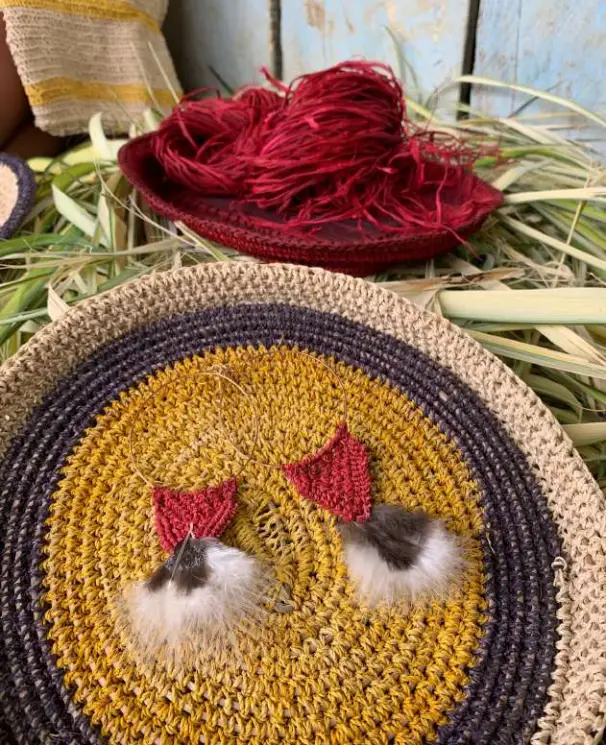
One of the project’s main pillars is strengthening the Association of Waorani Women of the Ecuadorian Amazon (AMWAE), an organization led by Indigenous women. Through the project, CODESPA strengthens the association’s capacities in financial management, marketing, and market access in order to expand economic opportunities for participating women.
The project also works directly with 90 Waorani women to strengthen the production of handicrafts made from chambira, a natural fiber extracted from an Amazonian palm tree. Through field schools and practical workshops, participants receive training to improve the quality of their products and increase their incomes.
“What I like most about this project is that we can earn money doing something that is part of our culture,” explained Gladis. “Our handicrafts represent who we are as Waorani people, and they also allow us to share our knowledge and traditions with people from different parts of Ecuador.”
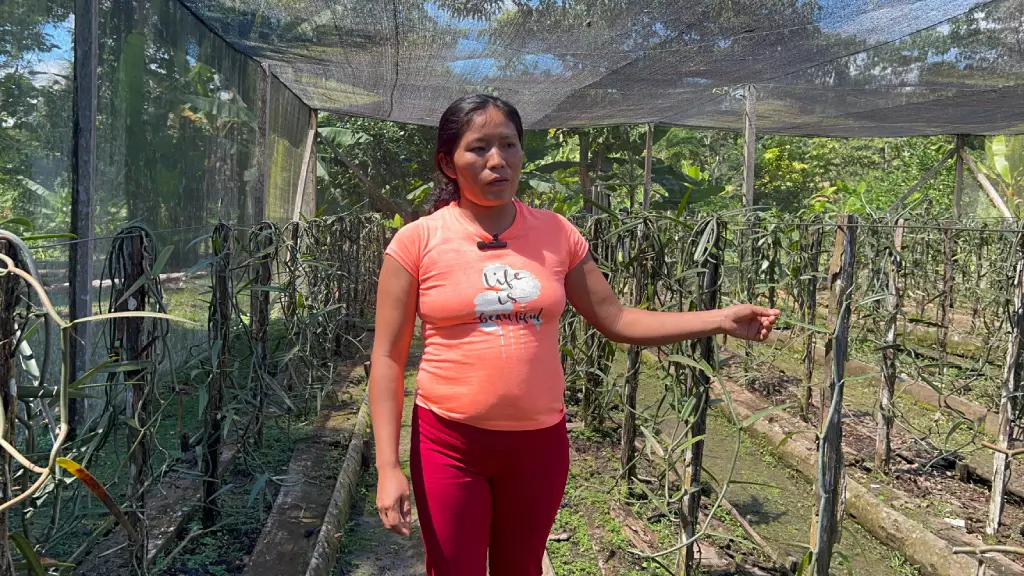
Environmental sustainability is also a central component of the initiative. Families participating in the project sign conservation agreements with AMWAE and commit to protecting the natural resources within their territories. In addition, the project helps establish community nurseries for chambira palms and plants used to produce natural dyes.
Karina Bautista, an agronomist and the technician in charge of bio-entrepreneurship initiatives at CODESPA Ecuador, coordinates this project from Pastaza province, in the Ecuadorian Amazon. There, she works closely with AMWAE and the beneficiary communities to drive sustainable productive initiatives that strengthen local livelihoods and contribute to the conservation of the territory.
“What we are promoting is a bioeconomy model,” states Karina. “This project demonstrates that economic development and conservation are not opposing goals. Rather, they can reinforce one another.”
For Karina, it´s important to remember that the Amazon is not only an ecosystem that must be protected. It is also home to thousands of people whose identities are deeply connected to the rainforest. For this reason, local communities must be placed at the center of any conservation initiative, she said.
Building Food Security
Malnutrition remains a significant challenge in many Waorani communities, particularly among children, pregnant women, and older adults, explained Karina. For this reason, CODESPA’s project includes initiatives designed to improve food security and family well-being.
One component of the project involves providing chickens for egg and meat production to 70 families in participating communities. Families also receive materials to build small chicken coops, as well as supplies for housing and feeding the chickens.
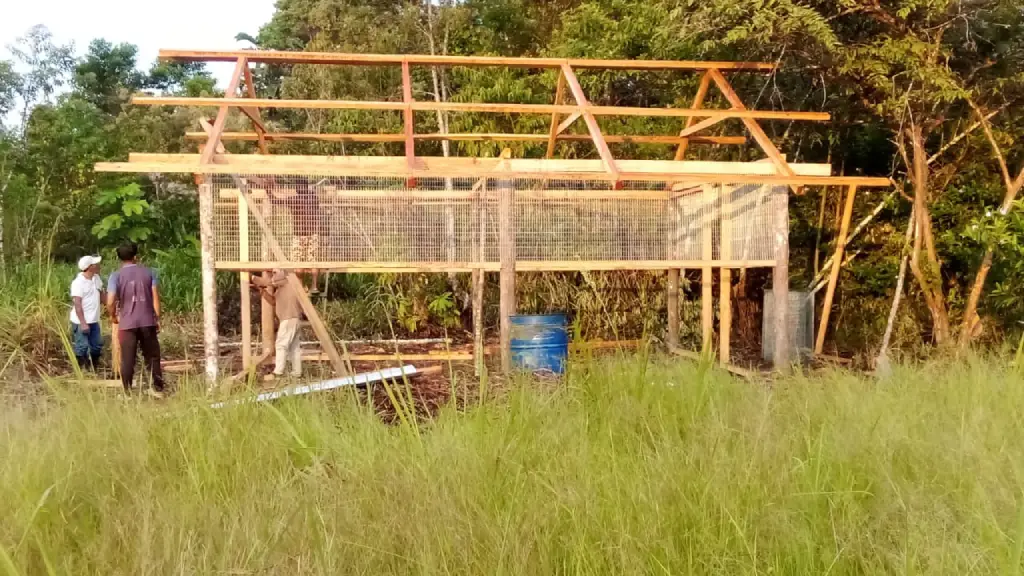
Karina noted that this aspect of the project has been particularly important for some of the more isolated Waorani communities. One of them is Tihueno, a community that can only be reached after a six-hour canoe journey followed by a three-hour walk through the rainforest.
Because of this isolation, transporting food, supplies, and other essential goods is especially challenging. Thanks to the initiative, families now have access to an additional source of protein and have learned how to raise chickens, a skill they can continue to use long after the project ends.
Supporting the Guardians of Waorani Memory
The initiative also supports 55 pikenani, the name given to Waorani elders, by providing support kits that may include basic health and hygiene items, non-perishable food, nutritional supplements, and materials for small home repairs.
“There is a particularly sensitive situation among the pikenani, the Waorani grandmothers and grandfathers,” said CODESPA´s project officer. “Many older people have been left isolated and living in highly vulnerable conditions.”
However, Karina explains that the project does not view the pikenani solely as a vulnerable population. It also recognizes the vital role they play within the community as “guardians of Waorani memory, oral tradition, and worldview.”
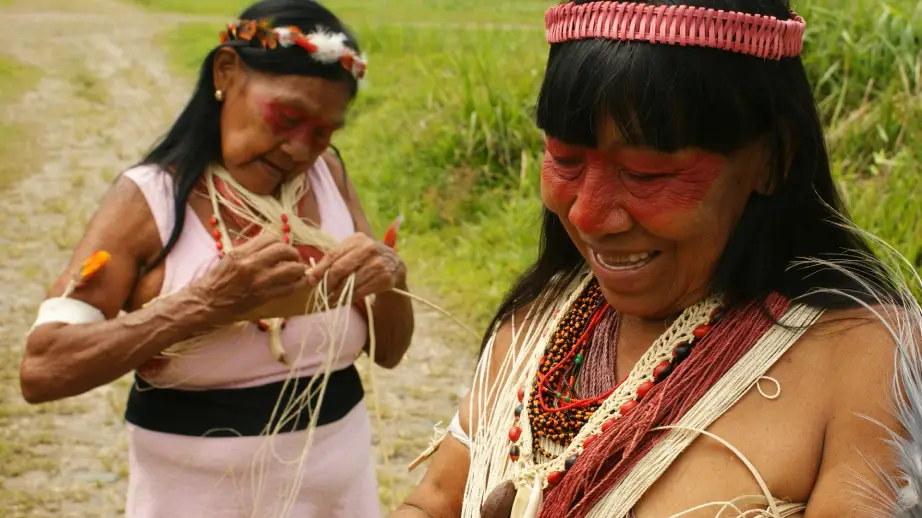
Through these actions, CODESPA and AMWAE demonstrate that Amazon conservation and economic development can go hand in hand. Gladis says that, thanks to the project, her community feels safer and better supported.
“For me, the most important thing is that we are learning, that we can improve the lives of our families, care for our elders, and create new opportunities without stopping the protection of the rainforest, which is our home.”