Transparencia de Fundació CODESPA Catalunya
The first projects of the CODESPA Foundation's project for people with disabilities in Guatemala have begun.
Since September 2023, a CODESPA Foundation project has been underway in Guatemala, with the support of the Seeliger y Conde Foundation. The project aims to help people with disabilities and their families escape poverty. To this end, they receive financial education and support throughout the process of developing their businesses, enabling them to generate a stable income and become self-sufficient.
The participants in this project live in remote rural areas in the municipalities of Jocotán and Camotán, in the Guatemalan department of Chiquimula, and suffer from double social exclusion: due to their poverty and due to their physical, visual, or hearing disabilities. Therefore, their involvement and commitment to this project, which will allow them to achieve autonomy and a means of support in the future, is especially commendable.
By joining the savings and credit groups, as part of the project’s activities, they receive financial education on basic topics such as financial goals, savings plans, investments, savings and credit, and budgeting. Additionally, with their monthly contributions, members consensually decide who in the group will be granted a small loan. This seed capital will allow them to acquire the necessary resources to launch their ventures.
Furthermore, all participants receive regular, personalized technical support from the CODESPA team. This includes identifying opportunities based on each individual’s business skills, developing a business plan and launching it, and even connecting with suppliers.
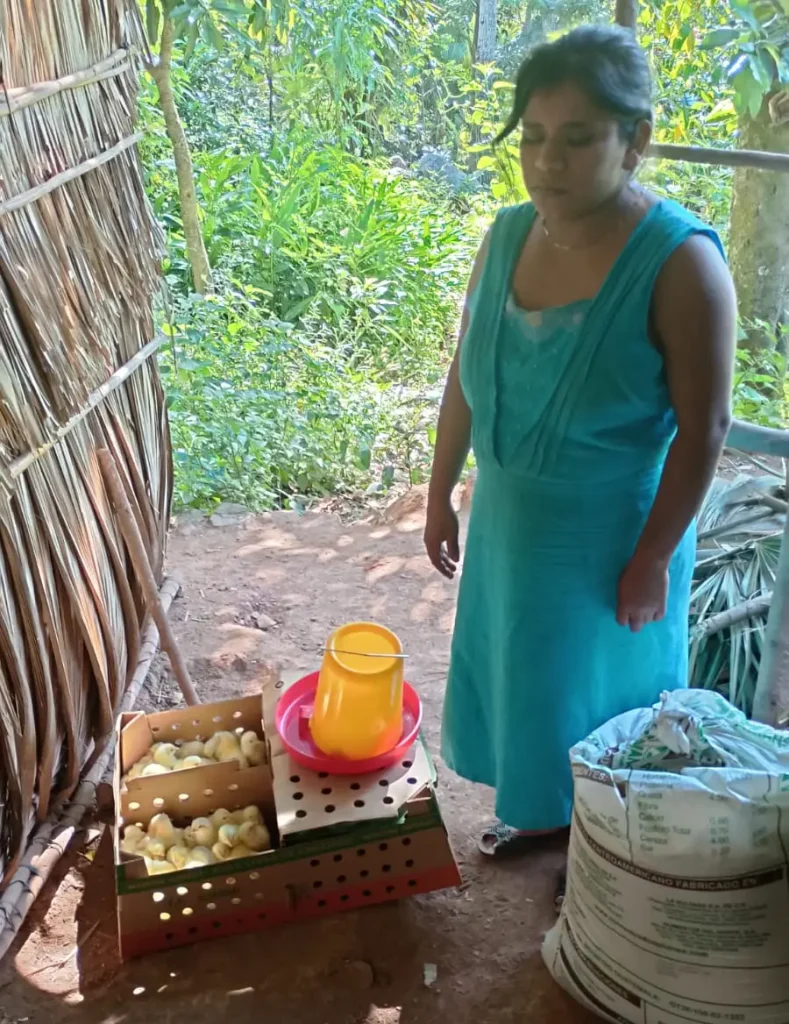
Rosario's visual impairment has not prevented her from starting a commercial chicken breeding business.
Among the success stories are Baudilio, who has a physical disability and decided to start a business selling used clothing, an economic activity that has allowed him to create a business opportunity and, at the same time, offer a service to his community; María del Rosario, a blind person who started a commercial business raising chickens; and Gilma Natalia, a caregiver for a person with a disability, who purchased a sewing machine to open her sewing workshop.
And so on, up to 26 stories that, in the first 6 months of the project, have led to as many commercial activities distributed across 3 grocery stores, 21 chicken farms, 1 used clothing farm, and 1 sewing workshop.
As the project progresses, the example of the entrepreneurs with disabilities has motivated other participants in the savings and credit groups to generate business ideas and decide to create or strengthen their own ventures. In the coming months, we will see more cases of self-improvement and success from people who, through these initiatives, will be able to improve their conditions and those of their families.