Socioeconomic integration of young girls in situations of exclusion through education, vocational training, and job placement in Morocco.
Country: Morocco.
Location: Tetouan.
Duration: March to October 2018.
Participants: 30 young women, between 18 and 25 years old, living in poverty and having dropped out of school.
Area of specialization: Vocational Training and Microentrepreneurship.
Starting point
In the Moroccan education and training system, academic failure and the lack of alternative training systems are two critical issues. Dropouts are common in the sixth grade of primary school, and for girls, much earlier. Or they may have never attended school, especially in the case of the most vulnerable families. Furthermore, it is more difficult for Moroccan women to access the labor market, especially if they lack training.
In this situation, it is necessary to coordinate initiatives to ensure adequate training for young Moroccan women, the preservation of their fundamental rights, and their access to the labor market with the maximum guarantees.
Objective
Improve the educational and vocational training levels of young women who have dropped out of school and are in poverty so that they can access the labor market.
What is the project about
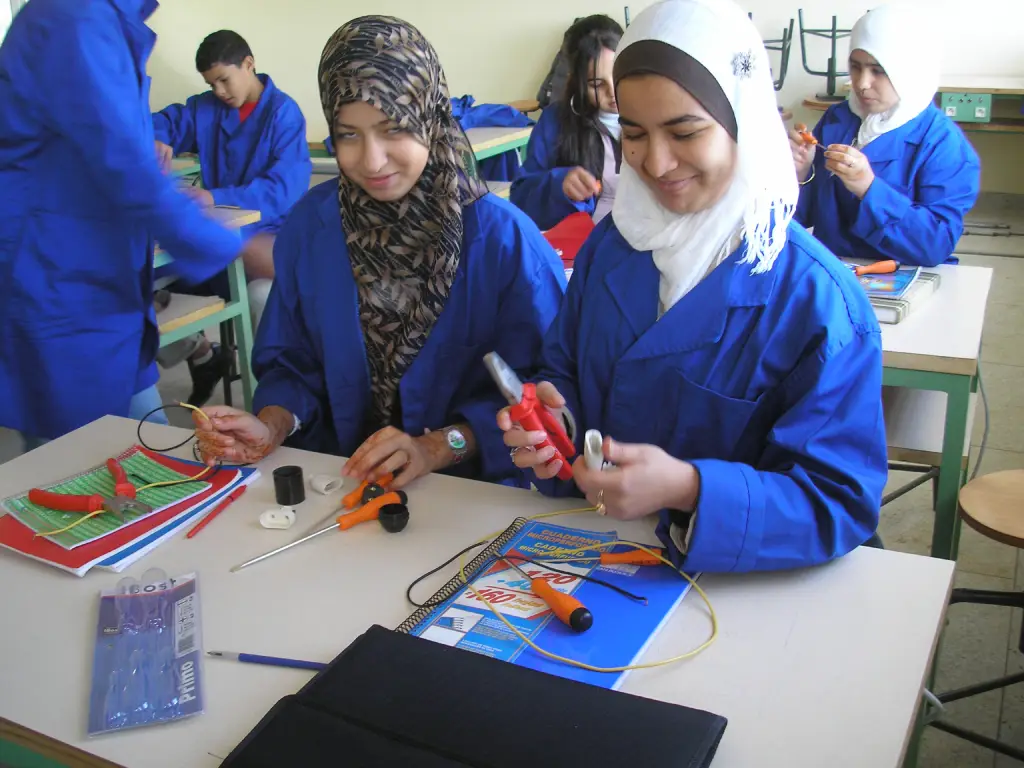
CODESPA seeks to implement an inclusive and accessible Education, Vocational Training, and Job Placement (EFIP) model for particularly vulnerable populations. In this case, they are provided technical training in various branches of the Moroccan Public Vocational Training program. Of these, at least 20% are in traditionally male-dominated fields, such as automotive electrical engineering. This also aims to increase the percentage of girls who train in innovative sectors, such as technology, with high job placement potential.
Furthermore, they are provided training in transversal skills, life skills, and active job search. This is complemented by guidance, support, and follow-up in professional placement to increase their chances of accessing decent and stable employment.