Seeds of the future to fight hunger in the Angolan highlands.
Country: Angola.
Location: Huambo and Bié Provinces.
Duration: March 2017 to February 2018.
Participants: 100 farming families in vulnerable situations.
Area of specialization: Rural Market Development, Food Security.
Starting point
Angola is one of the countries with the greatest potential for economic growth and foreign direct investment in Africa. However, poverty rates in the country are very high. 77% of its population lives in poverty and suffers from malnutrition. Due to low local production and a high dependence on food imports, the country’s food security is a clear cause for concern. This problem is exacerbated in rural areas, where 60% of the population lives in poverty.
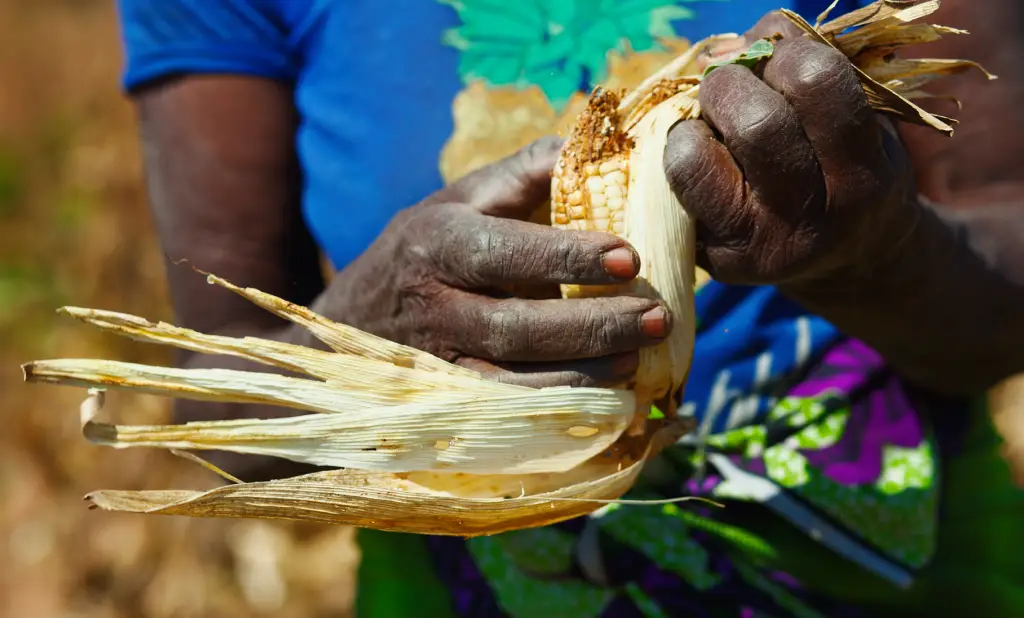
In the provinces of Huambo and Bié, the population engages in subsistence farming, where 47.5% of the population suffers from severe food insecurity. The reasons are diverse: low productivity of agricultural crops, the implementation of inadequate cultivation techniques, and limited access to quality seeds. Furthermore, only corn and potatoes are grown, resulting in a diet poor in protein and nutrients, which negatively impacts families’ health.
Objective
Contribute to reducing hungeramong vulnerable families dependent on agriculture in Angola.
What is the project about
Through the Field Schools, farmers receive practical training and technical assistance on land preparation, planting, and fertilization processes to improve agricultural practices, grain production, and seed selection.
Furthermore, seed banks are established. Recipients receive training and support at meetings held by the cooperatives that manage them. Each bank designs and validates the procedures for granting seed credit, as well as the process for returning or reimbursing the seed received by the beneficiary farmers.
Finally, soybean production and consumption are promoted. Awareness sessions are held on the nutritional properties of soybeans to improve families’ diets and calorie and protein intake.