
Development of rural markets to improve food security and farmers' living conditions in North Kivu, Democratic Republic of the Congo.
- Country: Democratic Republic of the Congo.
- Location: Sasha Zone, North Kivu Region.
- Duration: January 2017 to December 2020.
- Participants: 1,976 farmers from the Shasha zone (1,158 women and 818 men).
- Area of specialization: Rural Market Development, Vocational Training, and Microentrepreneurship.
Starting point
The project is located in the North Kivu region, one of the most conflict-ridden regions in the Democratic Republic of Congo, which has suffered the consequences of intermittent war since 1996.
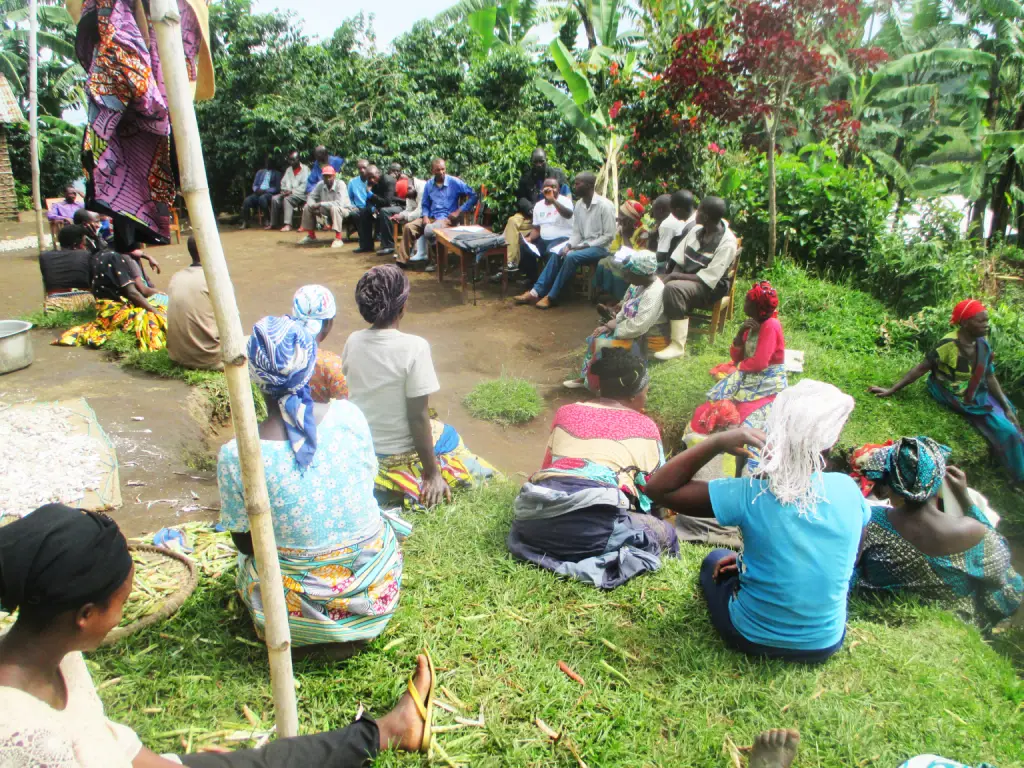
Participants are located in five communities around Shasha, a rural center three hours from Goma, where agricultural production and sales activities are concentrated. They lack access to basic services and are far from the main supply markets.
The beneficiaries are women and men whose primary means of subsistence are agriculture and livestock. Their resources, both material and educational, are very limited, and they are in a very precarious situation. They all share similar conditions of vulnerability: they do not have enough land to achieve productivity levels that would allow them to escape the subsistence economy; they lack quality seeds or technical knowledge on the best way to sow, treat, and harvest their small plots; and they lack a marketing structure that would allow them to sell surpluses at an advantageous price on the market.
Objective
To generate a self-sustaining local market for affordable, accessible services and technology that guarantees food security for 1,976 farming families in the Sasha area of North Kivu.
What is the project about
This project implements CODESPA’s Rural Market Development for the Poor program. In coordination with Don Bosco Ngangi (local partner), the initiatives will focus on addressing the shortage of land, seeds, knowledge, logistics, and sales services. The goal is to improve productivity and achieve minimum savings levels to meet other needs, such as education, healthcare, and communications, and improve their living conditions.
To achieve this, conditions must be created so that the local market can provide the five elements of the program and that the beneficiaries themselves can access them under fair conditions adapted to their ability to pay.
The different phases of the project are:
- Identification of the technology and support services required by beneficiaries.
- Development of the supply chain for technologies and services that best fit the beneficiaries’ situation and needs. This will be achieved through awareness-raising and training sessions for local entrepreneurs and suppliers.
- Developing demand by encouraging beneficiaries to adopt technology and acquire services tailored to their needs. This will allow them to improve their production and generate surpluses they can sell in rural markets.
This project directly impacts the achievement of four SDGs (Sustainable Development Goals): Zero Hunger, No Poverty, Decent Work and Economic Growth, and Partnerships for the Goals.
Entities that support this project