

Development of agroecological production to fight drought in southern Angola.
- Country: Angola
- Location: Municipality of Cuanhama and Cuvelai, Cunene Province
- Duration: August 2023 to July 2024
- Participants: 200 families affected by extreme drought
- Area of specialization: Food security, Rural market development
Starting point
This action will take place in the Cunene province, in the municipality of Cuanhama, located in a semi-arid agroecological zone, including the so-called “Southern Angola Livestock, Corn, and Sorghum Subsistence Zone,” where livestock and cereal cultivation are the population’s primary means of subsistence. Agriculture is artisanal, and the use of improved or locally adapted inputs is very low.
The region frequently experiences bouts of drought and, in some seasons and subregions, torrential rains that cause flooding. In recent years, droughts have become increasingly frequent and severe. Records indicate that the 2018/2019 drought was the most severe in at least three decades, affecting nearly 900,000 people in Cunene province, according to the Angolan government.
Cunene Province is affected by the process of desertification, which involves soil degradation and loss of productivity caused by factors such as drought, deforestation, and inappropriate agricultural practices, which has also led to the loss of biodiversity. Desertification is a major challenge for ecosystem conservation and the livelihoods of local communities.
This situation is exacerbated by population growth and climate change, making it urgent to adopt more sustainable approaches to natural resource management.
Objective
To improve the living conditions of families affected by drought through an agroecological production model—Syntropic Agriculture—in rural communities in the province of Cunene, aligning food production with the regeneration of degraded ecosystems.
What is the project about
The CODESPA Foundation has extensive experience in Angola, where it has been operating since 2010, helping rural communities increase their resilience to the effects of climate change.
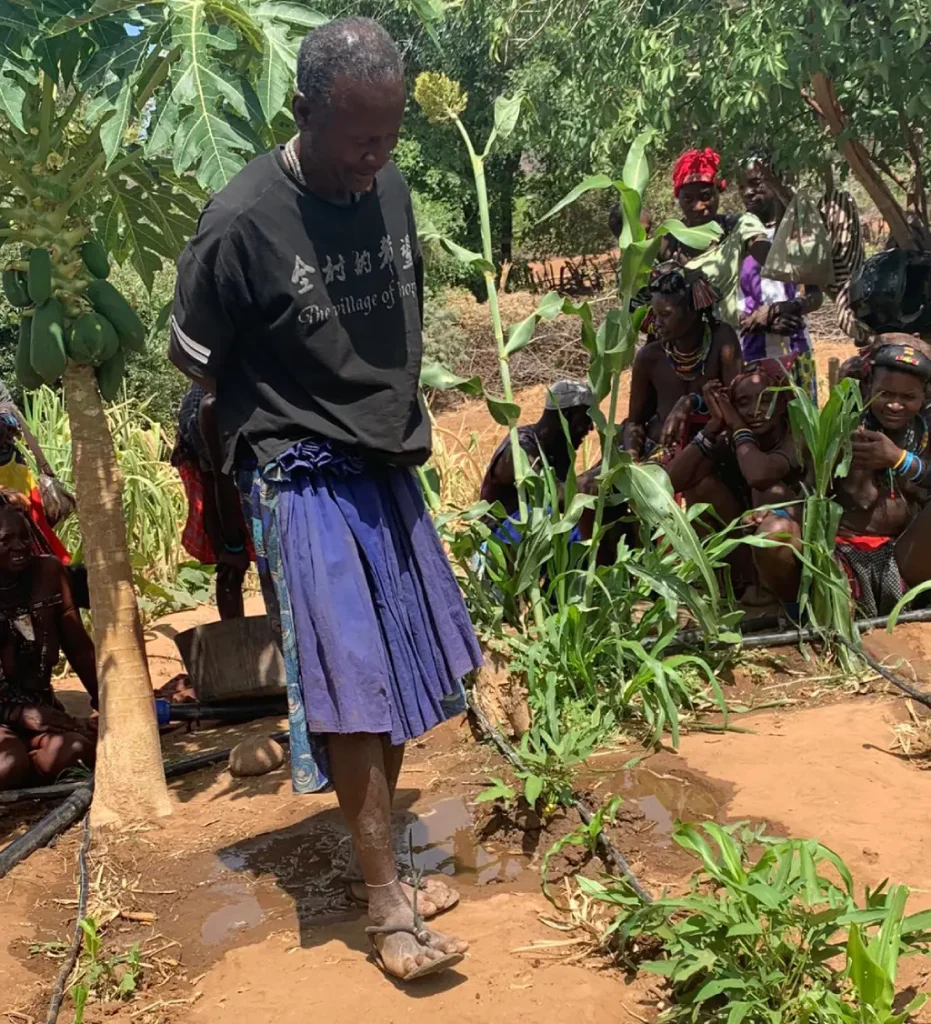
Within the framework of this project, work will be carried out through Field Schools, which, with an educational and capacity-building approach, provide farming families with theoretical and practical knowledge in sustainable agriculture techniques, natural resource management, and good agricultural practices. Specifically, they will receive training on the principles of syntropic agriculture and its benefits in terms of ecosystem services and food diversification.
For each of the Field Schools created, a syntropic agriculture demonstration plot will be implemented with the goal of developing a strategy for farmers to learn by practicing, i.e., “learning by doing”. Furthermore, this teaching methodology will emphasize participatory and collaborative learning, allowing farmers to acquire practical knowledge while exchanging information and techniques with other colleagues.
In this project, producer families will implement agroecological production models, which align crops with food value and ecosystem regeneration, primarily reforestation crops of native plant species.
Furthermore, seed banks will be strengthened by incorporating native forest species into their farms. The goal is to provide the most vulnerable producers with access to quality seeds in the form of in-kind credit.
This project bases its sustainability on the adoption of agricultural practices that respect nature, promote food security, generate income, value local culture, and strengthen community relations. This approach seeks to harmonize agricultural development with the conservation of natural resources, seeking a more resilient and balanced future.
Entities that support this project