Promoting employment for women in vulnerable situations in the tourism sector of Tetouan and Chaouen, Morocco.
Country: Morocco.
Location: Tetouan and Chaouen.
Duration: January 2022 to December 2023.
Participants: 60 women from Tetouan and Chaouen living in vulnerable situations.
Area of specialization: Vocational and micro-entrepreneurship training.
Starting point
Over the past few years, Moroccan society has undergone multiple changes, largely due to the country’s economic growth. Among them are those related to women’s rights, which has positioned Morocco as a benchmark in the Islamic world on this issue.
Since the country’s independence, women’s participation in the workforce has progressively increased. However, the jobs they perform remain mostly precarious and poorly paid, due to deep-rooted prejudices against women in society and the fact that women often work outside the home. Furthermore, Morocco has seen tremendous growth in domestic and international tourism in recent years. This situation, coupled with the fact that more than 50% of the country’s tourism workforce is female, creates a context that has been leveraged to generate opportunities for women to access decent working conditions, especially in Tetouan and Chefchaouen.
Objective
Promote decent and formal employment for Moroccan women in the tourism sector by strengthening the professional skills of 60 women working in the gastronomy, textile, and hotel sectors in the cities of Tetouan and Chaouen.
What is the project about
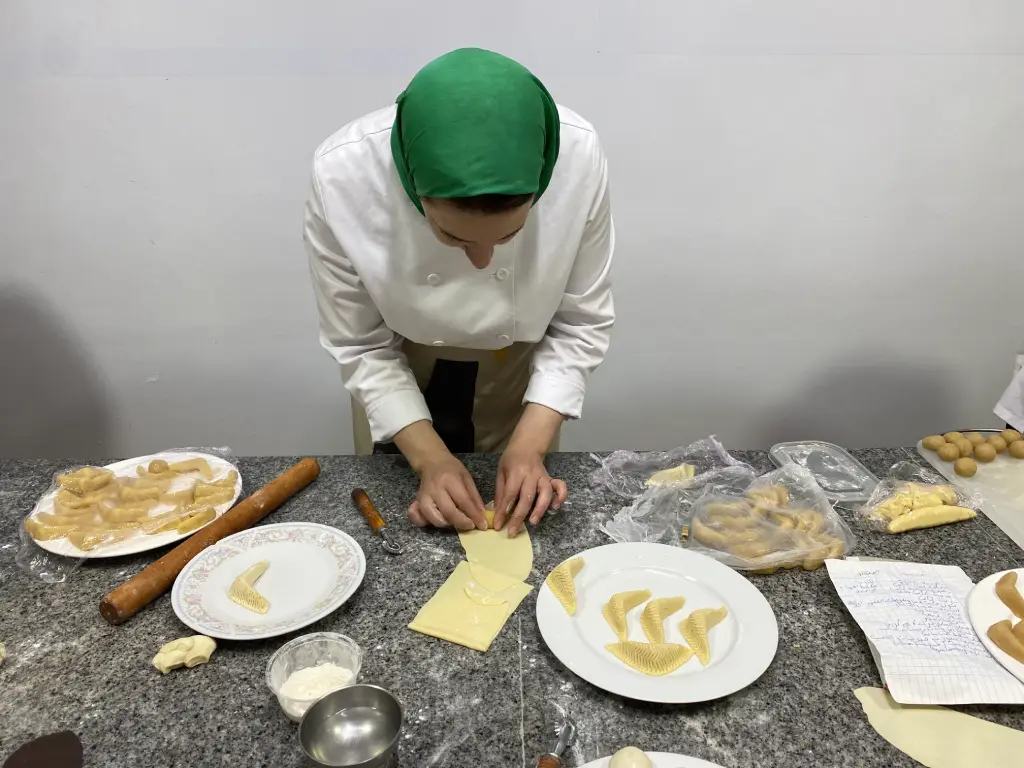
In this project, thanks to funding from the ISS Una Sonrisas Más, María Teresa Rodó, and Maite Iglesias Baciana Foundations, CODESPA collaborates locally with the Moltana Rayahin pastry cooperative in Tetouan and the Tanafelt textile cooperative in Chaouen. Through job training courses, internships, and psychosocial support, among other activities, the professional skills of 60 women are strengthened. They are also assisted in the job search process to ensure that their job is formal and dignified.
This training is provided to women between the ages of 18 and 55, who come from vulnerable backgrounds, lack professional skills, and have not completed basic education. All of them are mothers with an average of three children to support. The courses in textile, culinary, and hotel customer service skills will allow them to enter the workforce in cooperatives linked to the tourism and hotel sectors in Tetouan and Chaouen, formalized through an employment contract and receiving decent compensation.
CODESPA periodically monitors and evaluates fieldwork. These two elements are considered crucial for managing this type of project.